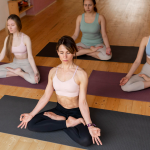
Pranayama & Breathwork: The Ancient Science of Breath
In the rush of modern life, we’ve forgotten one of our most powerful tools for health and wellbeing: our breath. We breathe approximately 20,000 times each day, yet most of us never give it a second thought. Pranayama, the ancient yogic practice of breath control, teaches us to harness this automatic function and transform it into a conscious, healing practice.
The word “pranayama” comes from two Sanskrit words: “prana” meaning life force or vital energy, and “ayama” meaning extension or expansion. Together, pranayama means the extension and control of the breath and, by association, the life force itself. This comprehensive guide will explore the transformative world of breathwork, providing you with practical techniques to enhance your physical health, mental clarity, and emotional balance.
Understanding Pranayama: More Than Just Breathing
While we all breathe automatically to stay alive, pranayama is the conscious regulation of breath through specific techniques and patterns. This distinction is crucial because conscious breathing activates different physiological and neurological pathways than unconscious breathing.
The Science Behind Breathwork – Modern research has validated what yogis have known for millennia: breath directly influences our nervous system, mental state, and overall health. Controlled breathing activates the parasympathetic nervous system, reducing stress and promoting relaxation. It increases oxygen delivery to cells and tissues throughout the body, balances the autonomic nervous system, improves heart rate variability which is a marker of health and resilience, enhances lymphatic drainage and immune function, and influences brain wave patterns, promoting mental clarity and focus.
When we practice pranayama, we’re not just moving air in and out of our lungs. We’re directly communicating with our nervous system, telling our body whether to be in fight-or-flight mode or rest-and-digest mode. This makes breathwork one of the most accessible and powerful tools for managing stress, anxiety, and overall wellbeing.
The Three Stages of Breathing – Complete yogic breathing involves three distinct areas: abdominal breathing (diaphragmatic) engages the diaphragm and fills the lower lungs, thoracic breathing (chest) expands the middle lungs and rib cage, and clavicular breathing (upper chest) fills the upper portions of the lungs. Most people breathe shallowly, using only the upper chest. Pranayama teaches us to breathe fully, utilizing our entire lung capacity for maximum oxygen intake and energy.
Types of Pranayama: A Complete Guide
There are numerous pranayama techniques, each with specific benefits and applications. Here are the most important practices for your breathwork journey.
Dirga Pranayama (Three-Part Breath) – This foundational technique teaches complete breathing and is perfect for beginners.
How to practice: Sit comfortably with a straight spine or lie on your back. Place one hand on your belly and one on your chest. Inhale deeply, first filling the belly, then the ribcage, then the upper chest. Exhale slowly, releasing air from the upper chest, then ribcage, then belly. Continue for five to ten rounds, focusing on smooth, even breathing.
Benefits include increased lung capacity, reduced stress and anxiety, improved oxygen circulation, enhanced body awareness, and a calming effect on the nervous system. Practice this technique anytime you feel stressed or need to center yourself.
Nadi Shodhana (Alternate Nostril Breathing) – One of the most balancing and purifying practices in yoga.
How to practice: Sit comfortably with spine erect. Use your right thumb to close your right nostril. Inhale slowly through the left nostril. Close the left nostril with your ring finger and release the right nostril. Exhale through the right nostril. Inhale through the right nostril. Close the right nostril and release the left. Exhale through the left nostril. This completes one round, continue for five to ten rounds.
Benefits include balancing the left and right hemispheres of the brain, calming the nervous system, clearing energy channels (nadis), reducing anxiety and mental chatter, improving focus and concentration, and balancing emotional states. This practice is particularly powerful before meditation or when you need mental clarity.
Ujjayi Pranayama (Victorious Breath or Ocean Breath) – Recognizable by its gentle ocean-like sound.
How to practice: Sit comfortably or practice during asana. Slightly constrict the back of your throat as if fogging a mirror. Breathe in and out through your nose, maintaining the constriction. Create a soft, whispering sound with each breath. Keep the breath smooth and even, typically four to six counts in and four to six counts out.
Benefits include building internal heat, improving concentration, regulating breath during physical practice, calming the mind while maintaining alertness, and supporting detoxification. Ujjayi is commonly used during vinyasa yoga to maintain focus and rhythm.
Kapalabhati (Skull Shining Breath) – An energizing, cleansing practice involving forceful exhalations.
How to practice: Sit with a straight spine. Take a deep breath in. Exhale forcefully through your nose by contracting your abdominal muscles sharply. Allow the inhale to happen passively as you release the contraction. Start with 20-30 rapid breaths, then take a deep breath and hold briefly. Complete three rounds with rest between each.
Benefits include energizing the body and mind, clearing the respiratory system, strengthening abdominal muscles, stimulating digestion, and clearing mental fog. Practice kapalabhati in the morning or when you need an energy boost. Avoid if pregnant, have high blood pressure, or during menstruation.
Bhramari (Bee Breath) – Named for the humming sound resembling a bee.
How to practice: Sit comfortably and close your eyes. Place your index fingers gently on the cartilage between your cheek and ear. Inhale deeply through your nose. As you exhale, press the cartilage and make a high-pitched humming sound. Focus on the vibration in your head and face. Repeat five to ten times.
Benefits include instantly calming anxiety, reducing anger and frustration, lowering blood pressure, relieving tension headaches, improving concentration, and preparing the mind for meditation. This is one of the fastest ways to calm an agitated mind.
Sitali Pranayama (Cooling Breath) – A cooling technique perfect for hot weather or when feeling overheated.
How to practice: Sit comfortably with spine straight. Curl your tongue into a tube (or if you can’t, purse your lips slightly). Inhale slowly through the curled tongue or pursed lips. Close your mouth and exhale through your nose. Feel the cooling sensation as air passes over your tongue. Repeat for five to ten rounds.
Benefits include cooling the body temperature, calming pitta (heat) in the body, reducing anger and frustration, soothing digestive issues, and refreshing the mind. Practice this during summer, after intense exercise, or when feeling irritable.
Bhastrika (Bellows Breath) – A powerful, energizing technique that should be practiced with caution.
How to practice: Sit in a comfortable position with spine erect. Take a deep breath in and forcefully exhale. Immediately take a forceful inhale. Continue rapid, forceful breathing in and out. Start with 10-15 breaths per round, complete three rounds with rest between each.
Benefits include rapidly energizing the body, clearing the respiratory system, strengthening the lungs, stimulating metabolism, and generating internal heat. This is advanced practice. Avoid if you have high blood pressure, heart conditions, are pregnant, or have respiratory issues. Always learn from a qualified teacher first.
Sama Vritti (Equal Breathing) – A simple yet powerful technique for balance and calm.
How to practice: Sit or lie comfortably. Inhale through your nose for a count of four. Exhale through your nose for a count of four. Keep the length of inhale and exhale equal. Gradually increase the count to six or eight as comfortable. Practice for five to ten minutes.
Benefits include balancing the nervous system, reducing anxiety and stress, improving focus and concentration, promoting better sleep, and creating mental equilibrium. This technique is excellent before bed or during moments of stress.
Viloma Pranayama (Interrupted Breath) – A practice of pausing during inhalation or exhalation.
How to practice: Sit comfortably with straight spine. Inhale in three parts, pausing briefly after each third. Exhale smoothly and completely. Repeat for several rounds, then reverse by inhaling smoothly and exhaling in three parts with pauses. Continue alternating for five to ten minutes.
Benefits include improving breath control, expanding lung capacity, enhancing focus and patience, strengthening respiratory muscles, and calming the mind. This practice builds exceptional breath awareness and control.
Breath Control for Stress Management
Stress has become the silent epidemic of our time, affecting every aspect of our health and wellbeing. The remarkable news is that your breath is the most accessible and powerful tool for managing stress, available to you at any moment.
How Breath Affects Stress – The relationship between breath and stress is bidirectional. When we’re stressed, our breathing becomes rapid, shallow, and irregular, typically confined to the upper chest. This activates the sympathetic nervous system (fight or flight), creating a stress feedback loop. Conversely, when we consciously slow and deepen our breath, we activate the parasympathetic nervous system (rest and digest), directly counteracting the stress response.
The vagus nerve, which runs from the brainstem to the abdomen, is the primary channel of the parasympathetic nervous system. Deep, slow breathing stimulates this nerve, sending signals to your brain that it’s safe to relax. This is why a few deep breaths can almost immediately shift your emotional state.
The 4-7-8 Technique for Immediate Stress Relief – Dr. Andrew Weil popularized this ancient technique as a natural tranquilizer for the nervous system.
How to practice: Sit comfortably with spine straight. Place the tip of your tongue behind your upper front teeth. Exhale completely through your mouth, making a whoosh sound. Close your mouth and inhale quietly through your nose for a count of four. Hold your breath for a count of seven. Exhale completely through your mouth for a count of eight, making the whoosh sound. This completes one cycle, repeat for four full cycles.
The ratio is more important than the exact timing. You can start with shorter counts (2-3.5-4) and build up. This technique works because the extended exhale and breath retention force your body to slow down, activate the parasympathetic response, and reset your nervous system. Practice this twice daily and whenever acute stress arises.
Box Breathing for Anxiety – Used by Navy SEALs and elite athletes to maintain calm under pressure.
How to practice: Visualize a square or box. Inhale through your nose for a count of four (one side of the box). Hold your breath for a count of four (second side). Exhale through your nose for a count of four (third side). Hold empty for a count of four (fourth side). Repeat for five to ten rounds or until you feel centered.
This technique creates mental focus, regulates the nervous system, provides structure during chaotic moments, and restores emotional balance. The equal counts create a sense of stability and control.
Coherent Breathing for Long-Term Resilience – Breathing at approximately five breaths per minute has been shown to maximize heart rate variability.
How to practice: Inhale gently through your nose for a count of five or six. Exhale gently through your nose for a count of five or six. Maintain this rhythm for five to twenty minutes. Practice daily for cumulative benefits.
Regular practice of coherent breathing builds long-term stress resilience, improves cardiovascular health, enhances emotional regulation, supports better sleep, and increases overall wellbeing. This is one of the most researched breathwork techniques for stress management.
Emergency Breathing for Panic Attacks – When panic strikes, try this grounding technique.
How to practice: Acknowledge you’re having a panic attack without judgment. Place one hand on your belly and one on your chest. Focus on breathing into your belly, making the bottom hand rise. Count your exhales out loud or mentally to engage your thinking mind. Extend your exhales to be longer than your inhales. Continue until the panic subsides, typically five to ten minutes.
The extended exhale is crucial because it activates the parasympathetic response more strongly than the inhale. Counting engages your prefrontal cortex, helping to override the panic response.
Lung Capacity Improvement
Whether you’re an athlete, singer, or simply want to breathe better, expanding your lung capacity improves overall health, endurance, and vitality.
Understanding Lung Capacity – Most people use only a fraction of their lung capacity in daily life. Total lung capacity includes tidal volume (normal breathing), inspiratory reserve volume (additional air you can inhale), expiratory reserve volume (additional air you can exhale), and residual volume (air remaining after complete exhale). Through pranayama, we can significantly increase our functional lung capacity.
Benefits of Increased Lung Capacity – Expanding your respiratory capacity provides numerous advantages. It improves oxygen delivery to all cells and tissues, enhances athletic performance and endurance, supports cardiovascular health, increases energy levels throughout the day, strengthens respiratory muscles, and improves overall vitality. Better breathing literally means better living.
Progressive Breath Retention for Capacity Building – This practice systematically increases your ability to hold breath comfortably.
How to practice: Sit comfortably with spine straight. Inhale completely but not strenuously. Hold your breath comfortably (don’t strain). Exhale slowly and completely. Rest with normal breathing for a few breaths. Repeat, gradually increasing retention time over weeks and months. Start with holding for five to ten seconds and build progressively.
Important note: Never force breath retention. If you feel dizzy, lightheaded, or uncomfortable, release immediately. The goal is comfortable expansion, not painful strain.
Breath Counting for Expansion – This technique systematically lengthens your breath cycles.
How to practice: Begin with your natural breath rhythm, counting the length. If you inhale for four counts and exhale for four counts, add one count to the exhale (four in, five out). Practice this for several weeks until comfortable. Then add one count to the inhale (five in, five out). Continue this progressive lengthening gradually over months. Eventually, you might breathe six to eight counts in and eight to ten counts out.
The key is gradual progression. Rushing leads to tension and defeats the purpose. Let your capacity expand naturally over time.
Diaphragmatic Strengthening – The diaphragm is your primary breathing muscle, and strengthening it improves capacity.
How to practice: Lie on your back with knees bent. Place a light book or your hands on your belly. Inhale deeply, raising the book or hands as high as possible. Exhale completely, allowing the book or hands to lower. Focus on isolating diaphragmatic movement. Practice for five to ten minutes daily.
Over time, this strengthens the diaphragm, increases abdominal breath awareness, improves breathing efficiency, and builds the foundation for advanced practices.
Full Yogic Breath for Maximum Capacity – This practice uses your entire lung capacity systematically.
How to practice: Sit or lie comfortably with straight spine. Begin inhaling into your lower belly, allowing it to expand. Continue inhaling into your ribcage, feeling it expand outward. Complete the inhale into your upper chest and collarbones. Exhale in reverse order from upper chest, then ribcage, then belly. Keep the breath smooth and continuous like a wave. Practice for five to ten minutes daily.
This practice teaches complete breath utilization, expands all areas of the lungs, increases overall capacity, and enhances breath control and awareness.
Breathing Exercises with Movement – Combining breath with gentle movement enhances capacity.
Practice arm raises with breath by standing with arms at sides, inhaling as you slowly raise arms overhead, and exhaling as you lower them back down. Coordinate movement speed with breath length. This coordinates breath with movement, expands the chest cavity, and builds breathing stamina.
Try side bends with extended exhale by standing with feet hip-width apart, inhaling deeply, exhaling slowly as you bend to one side, and inhaling as you return to center. The side bend increases lung expansion and the extended exhale builds capacity.
Morning Breathing Routines
How you begin your day sets the tone for everything that follows. A morning breathing routine energizes your body, clears your mind, and establishes a foundation of calm awareness that carries through your day.
Why Morning Breathwork Matters – Practicing pranayama in the morning offers unique advantages. Your stomach is empty, which is ideal for breathwork, the mind is fresh and less cluttered, you set a positive intention for the day, early practice boosts energy naturally without caffeine, and morning oxygen intake jumpstarts your metabolism. Even just five to ten minutes can transform your entire day.
The 5-Minute Morning Energizer – Perfect for busy mornings when time is limited.
Minute 1: Three-Part Breath to center and awaken. Sit comfortably and practice dirga pranayama, focusing on full, complete breathing. Take five to six deep, full breaths.
Minute 2: Kapalabhati to energize and clear. Practice one round of 30 skull shining breaths, then rest with normal breathing. Feel the invigoration spreading through your body.
Minute 3: Alternate Nostril Breathing to balance. Practice five rounds of nadi shodhana to balance your energy and calm your mind.
Minute 4: Ujjayi Breath for focus. Take ten victorious breaths, building internal heat and concentration.
Minute 5: Intention Setting. Sit quietly, breathing naturally, and set an intention for your day. Notice how you feel compared to when you started.
This quick routine energizes without overstimulating, balances your nervous system, clears mental fog, and prepares you mentally and physically for the day ahead.
The 15-Minute Morning Revival Practice – For a more comprehensive morning routine when you have time.
Minutes 1-3: Seated Centering. Sit comfortably with spine straight, close your eyes and observe your natural breath, notice the quality of your breath and how your body feels, and set an intention to be present for your practice.
Minutes 4-6: Three-Part Breathing to establish foundation. Practice dirga pranayama for 10-12 full breaths, focusing on smooth, even breathing through all three parts, and feel your lungs fully expanding.
Minutes 7-9: Kapalabhati for Energy. Complete three rounds of 30-40 skull shining breaths with rest between rounds. Feel heat building and energy circulating.
Minutes 10-12: Nadi Shodhana for Balance. Practice 8-10 rounds of alternate nostril breathing, maintaining smooth, even breath, and notice the calming yet alert quality this creates.
Minutes 13-14: Bhramari for Mental Clarity. Practice five rounds of bee breath, allowing the vibration to clear your mind and settle your energy.
Minute 15: Integration and Intention. Sit quietly with natural breathing, notice the shift in your energy and mental state, and set a clear intention for how you want to show up today.
This comprehensive routine provides deep energy, mental clarity and focus, emotional balance, and a strong foundation for your day.
The 30-Minute Complete Morning Practice – For days when you can dedicate more time to yourself.
Minutes 1-5: Mindful Arrival. Sit comfortably and settle into stillness, observe your breath without changing it, scan your body and notice areas of tension or ease, and acknowledge any thoughts or emotions present.
Minutes 6-10: Foundation Building with Three-Part Breath. Practice slow, complete dirga pranayama for 15-20 breaths, focus on smoothness and fullness of each breath, and establish deep diaphragmatic breathing.
Minutes 11-15: Energizing with Kapalabhati. Complete four rounds of 40-50 skull shining breaths, rest fully between each round, and feel energy building and mind clearing.
Minutes 16-20: Balancing with Nadi Shodhana. Practice 12-15 rounds of alternate nostril breathing, gradually slowing and deepening each breath, and experience the profound balance this creates.
Minutes 21-25: Calming with Bhramari and Sitali. Alternate between five rounds of bee breath and five rounds of cooling breath, notice the soothing quality this combination creates.
Minutes 26-28: Coherent Breathing for Resilience. Practice five-count inhale and five-count exhale, maintain this rhythm for two to three minutes, and build heart rate variability and stress resilience.
Minutes 29-30: Meditation and Intention. Sit in stillness with natural breath, set your intention for the day, and carry this centered, energized state into your day.
This complete practice provides maximum energy and vitality, deep mental clarity, emotional balance and resilience, and a profound sense of wellbeing.
Seasonal Morning Variations – Adapt your morning practice to the seasons.
Summer Mornings: Emphasize cooling breaths like sitali, practice near an open window for fresh air, and include more calming techniques to balance summer’s heat.
Winter Mornings: Focus on warming breaths like ujjayi and bhastrika, practice in a warm space, and emphasize energizing techniques to counter winter sluggishness.
Spring Mornings: Include kapalabhati for cleansing, practice moderate-paced breathing, and balance energizing and calming techniques.
Fall Mornings: Emphasize grounding practices like three-part breath, include nadi shodhana for balance, and practice stability and steadiness.
Building Your Pranayama Practice
Whether you’re new to breathwork or looking to deepen your practice, these guidelines will help you build a sustainable, beneficial routine.
Starting Safely – Pranayama is powerful medicine and should be approached mindfully. Always practice on an empty stomach (at least two hours after eating), sit with proper posture to allow free breathing, never strain or force the breath, stop immediately if you feel dizzy, lightheaded, or uncomfortable, start with shorter practices and build gradually, and learn advanced techniques from qualified teachers. If you have respiratory conditions, heart disease, high blood pressure, or are pregnant, consult your healthcare provider before beginning breathwork.
Creating Consistency – Like any practice, pranayama yields results through regular application. Practice at the same time daily to build a habit, start with just five to ten minutes and increase gradually, keep your practice space consistent and inviting, and track your practice in a journal to notice patterns and progress. Consistency matters more than duration. Five minutes daily yields more benefit than 30 minutes sporadically.
Progressing Mindfully – As your practice develops, progress systematically. Master foundational techniques before advancing, gradually increase breath counts and retention times, add complexity only when ready, and listen to your body’s wisdom always. Pranayama is not competitive. Your only comparison is yourself yesterday.
Signs of Progress – Over time, you’ll notice various improvements including easier, fuller breathing in daily life, better stress management and emotional regulation, increased energy and vitality, improved sleep quality, enhanced mental clarity and focus, and greater overall sense of wellbeing. These changes accumulate gradually, creating profound transformation over months and years.
Yoga for Joint Pain and Mobility
Whether due to arthritis, injury, aging, or overuse, joint pain affects quality of life significantly. Yoga’s gentle approach can improve joint health and restore mobility safely.
Understanding Yoga’s Impact on Joints – The practice supports joint health through multiple pathways. Gentle movement maintains and improves range of motion, strengthening surrounding muscles that stabilize joints, increasing synovial fluid production that lubricates joints, reducing inflammation that causes pain, improving circulation to deliver nutrients to joints, and enhancing proprioception (body awareness) to prevent injury. The key is practicing mindfully and within your comfortable range.
Principles for Joint-Friendly Practice – When dealing with joint pain, follow these guidelines. Always warm up thoroughly before deeper movements, move slowly and mindfully, never push into pain, use props generously for support, focus on alignment to protect joints, practice on softer surfaces when helpful, and stay hydrated to support joint lubrication. Quality of movement matters far more than quantity or intensity.
Gentle Poses for Joint Mobility – These poses improve mobility without stressing joints.
Chair Pose strengthens without impact. Sit in a chair or squat slightly with support, keep knees aligned over ankles, and engage leg muscles to protect knee joints. This builds strength that protects joints.
Gentle Neck Rolls release tension and improve cervical mobility. Sit comfortably with spine long, slowly roll your head in circles, and reverse direction after a few rotations. Move very slowly and skip if it causes dizziness.
Wrist Circles maintain hand and wrist mobility. Extend arms and circle wrists in both directions, spread fingers wide and make fists, and practice regularly if you use your hands extensively. This prevents stiffness and maintains function.
Ankle Circles preserve ankle flexibility and strength. Sit comfortably and lift one foot, circle ankle slowly in both directions, and point and flex the foot. This is especially important as we age.
Supine Hip Circles gently mobilize the hip joints. Lie on your back and draw one knee to chest, circle the knee slowly in both directions, and keep movements small and controlled. This maintains hip mobility without weight-bearing stress.
Yoga for Arthritis – Arthritis requires special consideration but yoga can be highly beneficial. Practice during times when pain is lower, use chair yoga modifications when needed, focus on gentle, flowing movements, include rest periods between poses, and communicate with your instructor about your needs. Studies show that regular gentle yoga reduces arthritis pain and improves function.
Complementary Practices – Enhance your yoga practice with other joint-supportive activities. Consider swimming or water aerobics for low-impact movement, practice tai chi for additional gentle mobility work, use heat therapy before practice to warm joints, apply ice after practice if experiencing inflammation, and maintain a healthy weight to reduce joint stress. An integrated approach yields the best results.
Conclusion: The Breath of Life
Your breath is the bridge between your conscious and unconscious mind, between your body and spirit, between stress and peace. Through pranayama, this automatic function becomes a conscious tool for transformation, healing, and awakening.
Whether you practice for five minutes or fifty, whether you’re seeking stress relief, increased lung capacity, morning energy, or spiritual development, pranayama offers a path. The techniques are simple, requiring nothing but your attention and your breath. Yet their effects are profound, touching every aspect of your physical health, mental clarity, and emotional wellbeing.
Start today. Start simply. Take a few conscious breaths right now, noticing the miracle of air entering and leaving your body. This is pranayama. This is the beginning of a lifelong journey with your most intimate companion: your breath.
Remember, every master was once a beginner who simply kept breathing, kept practicing, and kept showing up. Your breath is waiting to teach you its secrets. All you need to do is pause, notice, and breathe.
Safety Reminder: This information is for educational purposes only. Pranayama is a powerful practice that affects the nervous system, cardiovascular system, and overall physiology. Always consult with qualified healthcare providers before beginning breathwork, especially if you have any medical conditions. Learn advanced techniques from certified yoga teachers or pranayama specialists. Never practice breath retention while driving, swimming, or in any situation where loss of consciousness could be dangerous.